

In times of need, Vols help Vols. When a critical situation involves alcohol or other drugs, however, some students may find themselves unsure of how to handle the situation out of fear of potential repercussions. To support Vols in making the safest decisions for themselves and others, an amnesty policy exists on the UT campus to protect students from formal disciplinary actions regarding alcohol or drug use when reaching out for help for a student in need.
Through the amnesty policy, a student, referred to by the policy as a Good Samaritan, is able to call law enforcement, medical emergency services, or university staff to seek help for an impaired student in need. By contacting help and staying with the impaired student, both the Good Samaritan and the impaired student are granted amnesty from formal discipline with the university. Amnesty can also apply to more than one student in a given situation or to a student who called for help for themselves.
While the amnesty policy supports the health and well-being of students, a lack of campus-wide awareness on the policy has inhibited it from meeting its intended purpose, despite previous communication efforts. Student Conduct and Community Standards (SCCS) staff members recognized this disconnect, leading to the creation of the Amnesty is Sweet as Soda Pop campaign.
Launched in the fall of 2024, the collaborative campaign between SCCS, the Center for Health Education and Wellness, and Student Government Association (SGA)is working to inform students of the amnesty policy, helping students to make safer decisions in stressful situations. By collaborating across departments and with student government, the campaign provides a wide range of information and resources regarding the policy, making healthy choices, and what it means to be a Vol.
Throughout the campaign’s first semester, a total of 12 tabling events were held on campus. They also hosted several pop-up events and provided information at various Student Life events, reaching a wide range of students. At each event, a variety of items were available to help promote the campaign’s mission, such as soda, T-shirts, and koozies with an info sheet attached.
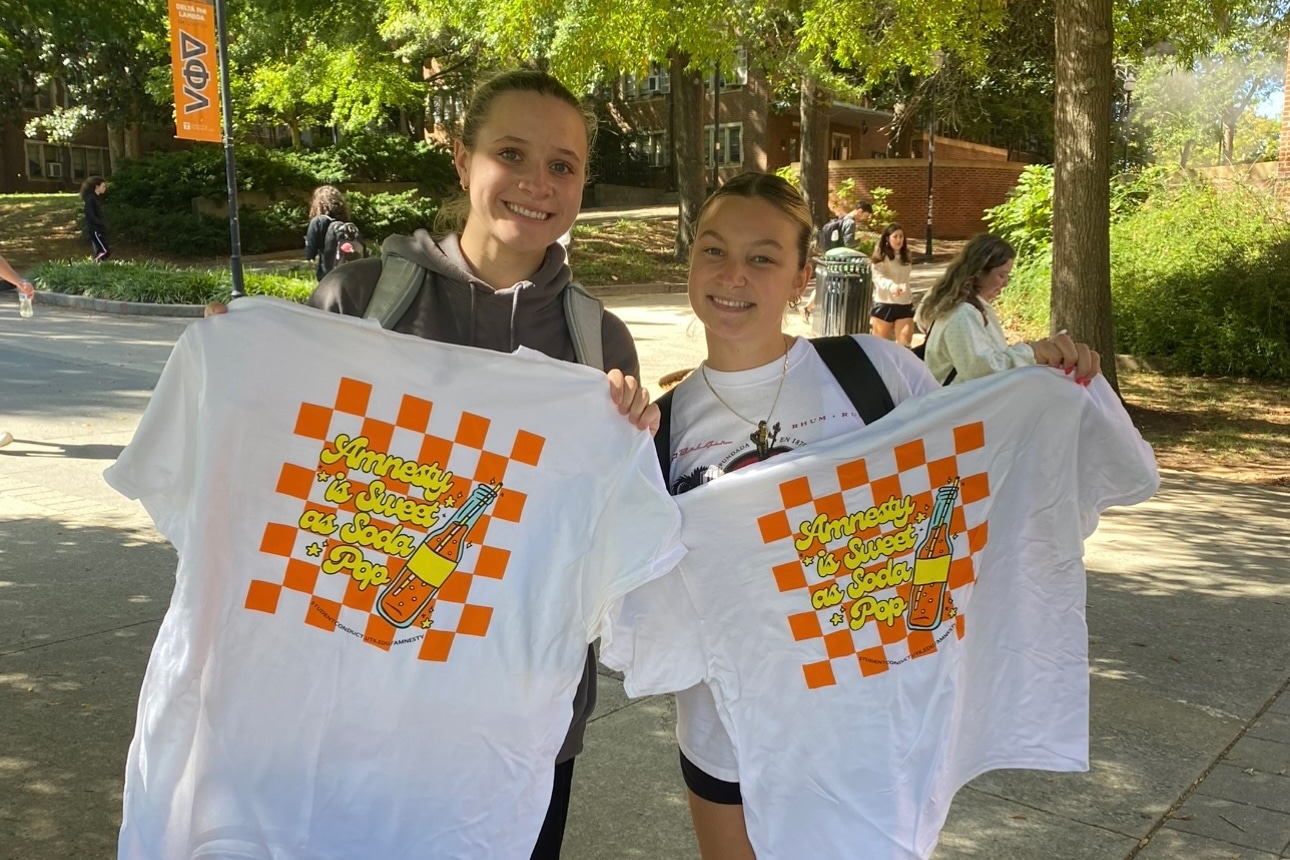

At each tabling event, students have the opportunity to talk to representatives from Center for Health Education and Wellness staff members to learn more about alcohol education information as well as SCCS to better understand the amnesty policy and how it is implemented. Understanding that talking to these departments could make some students nervous, there are also well-informed SGA representatives at each tabling event, allowing for peer-to-peer education about how the amnesty policy operates and can be utilized to help fellow Vols. The tabling events also encourage student leaders to take action if they see a fellow Vol in need, reminding them to do the next right thing without fear of university discipline or negative consequence.
When the amnesty policy is applied to an alcohol related incident, the impaired student will meet with the Center for Health Education and Wellness for an educational meeting, creating goals and solutions to avoid similar concerns in the future. The student that reached out for help will receive a Good Samaritan letter from SCCS thanking them for helping a Vol in a time of need and doing the right thing.
For continuing student Weston Hamilton, volunteering as a member of SGA at the tabling events was his first opportunity to be involved on campus. He decided to dive in and attended every tabling event for the amnesty campaign throughout the 2024–2025 academic year, turning his dedication to health and campus safety into action.
“It’s an awesome policy, for students to know you can call and make sure your friends are safe,” says Hamilton, a sophomore studying biochemistry. “One impactful conversation was with a resident assistant who had used the policy for a student last year. The student needed help, and the RA was able to call for help without worrying the student was going to get in trouble.”
Hamilton, who now serves his peers as a member of the SGA executive team and as a Vols 2 Vols peer health educator, plans to continue volunteering with the campaign and help students realize that even if they don’t need the policy for themselves it’s there if they realize a fellow Vol is in trouble.
Significant efforts are also being made to ensure that first-year students are informed of the policy as they begin a new chapter in their lives at UT. An explanation of the amnesty policy is included in the Vol 103 orientation modules that all incoming students must complete, helping students to be informed from the start.
The collaborative campaign demonstrates the university values of success and wellness through helping students to understand a policy that could appear intimidating at first, but ultimately has the power to save lives and care for fellow Volunteers, supporting a positive, safe campus culture. After a successful first year, the campaign leaders plan to continue into the 2025–2026 academic year with tabling and informational events to connect with more students, creating a well-informed student body.