
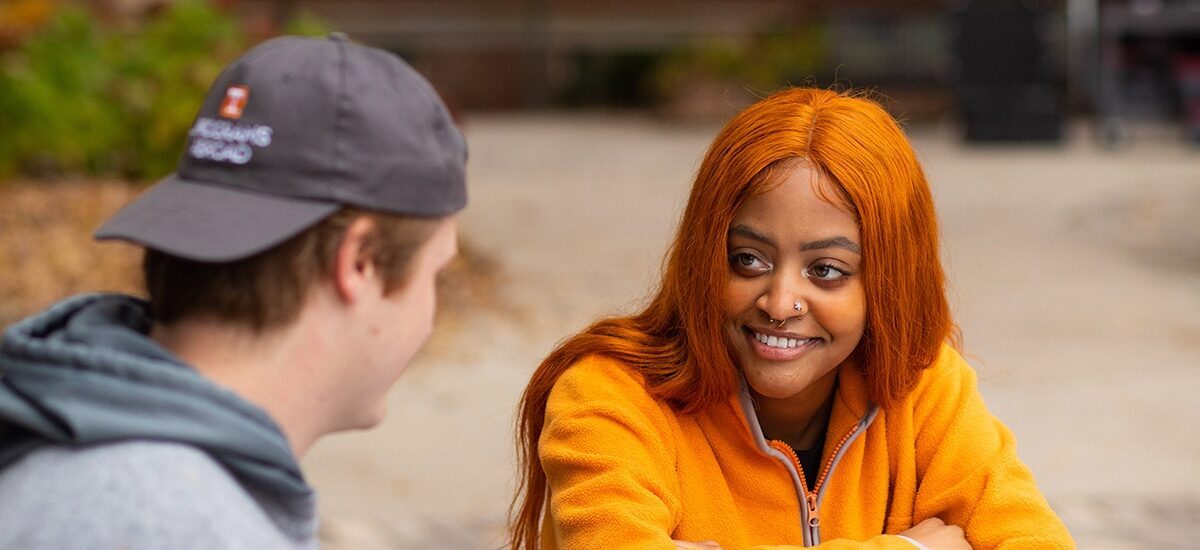
For new students arriving on campus for the first time, the sheer number of people, offices, and opportunities that make up UT can be overwhelming. But with the help and friendship of a peer mentor through Student Disability Services (SDS), new Vols registered with the office can have a kind and supportive welcome to campus and a chance to find a sense of belonging.
“When students are new to a university, new to the Knoxville area, or have never truly been on their own before it can be overwhelming,” says Laurel Lefemine, access coordinator for SDS and one of the coordinators for the peer mentoring program. “This program is one of the many ways UT helps decrease feelings of uncertainty when students are new.” For students registered with SDS, the program is a chance to become knowledgeable and comfortable with campus, SDS, and college life in general.
“This program is one of the many ways UT helps decrease feelings of uncertainty when students are new.”
Laurel Lefemine
Access Coordinator
Student Disability Services
New students are invited to join the program in their initial meeting with SDS, and coordinators match students with a peer mentor based on disability status, shared hobbies, or even a shared major, ensuring both parties have at least one common area of interest. Students take ownership from there, with mentors initiating contact with their mentees. Previously, the program was only open to first-year students, but that changed in fall 2024 thanks to student feedback. Now, any new first-year student, transfer student, or graduate student is eligible to join the program.
While students volunteer to serve as peer mentors, key outcomes are expected from each mentor pair. Mentors meet with their mentee at least once each week to talk about how their Volunteer experience is going and share guidance about utilizing accommodations or working with faculty. Peer mentors are also tasked with sharing at least two campus resources with their mentees, helping newer students know where to turn when they need academic support, help addressing their health or well-being, or experience needs in other areas. Mentors also help mentees develop SMART goals for each semester and attend at least one university event together to help new students feel comfortable engaging with campus opportunities.
Through the program, mentors also get to grow in their leadership and interpersonal skills as they build a connection with their mentee and help them find their way as a new Volunteer. These returning students have a chance to pass on the knowledge they’ve accumulated as a student with a disability to a new Vol experiencing the same situations for the first time.
“The mentees have an opportunity to learn from another student who has been in their shoes, and it’s not uncommon for previous mentees to serve as peer mentors in the future,” adds Lefemine.
“Despite being an online-only student, I feel a strong sense of belonging at UT because of the incredible support and community I’ve experienced here. Everyone at the SDS office, especially my mentor, has been instrumental in ensuring I have the resources and accommodations I need to succeed. Her encouragement and advice has been instrumental in helping me feel valued as both a student and an individual. Additionally, being part of a welcoming and inclusive campus, where my contributions and presence matter, has solidified my connection to UT. It’s this supportive environment that makes me proud to call UT home.”
SDS Peer Mentee
At its core, the program is an opportunity for connection between students who belong to the disability community. When mentors and mentees were asked what makes them feel like they belong at UT, every response referenced making connections with other people.
One student surveyed said, “As a peer mentor, one of the most profound lessons I learned about myself is my ability to empathize and adapt to others’ unique needs. Mentorship required me to actively listen, not just to respond, but to truly understand the perspectives and challenges faced by others. This process revealed to me how deeply I value connection and collaboration, as well as how fulfilling it is to help others grow.”
As the program continues to grow and evolve and in response to student feedback, Lefemine will manage the program with another SDS access coordinator, Shelby Markel, for the 2025–2026 academic year. This change will mean one coordinator works with mentors while another works with mentees, supporting growth and creating a more tailored experience for both groups.
“The peer mentor program is truly a group effort across the entire staff, because it would not be where it is today without each staff member’s input and guidance. SDS is a place where students come first, and this program is a prime example of that,” says Lefemine.
By participating in the Student Disability Services Peer Mentoring Program:
91% of peer mentors and 67% of mentees reported they felt a stronger sense of belonging to the UT community
91% of peer mentors and 75% of mentees reported they made a social connection
91% of peer mentors and 75% of mentees reported they feel more connected/integrated to UT
91% of peer mentors and 83% of mentees reported the program supported their success at UT
100% of peer mentors and 83% of mentees report being satisfied with their experience