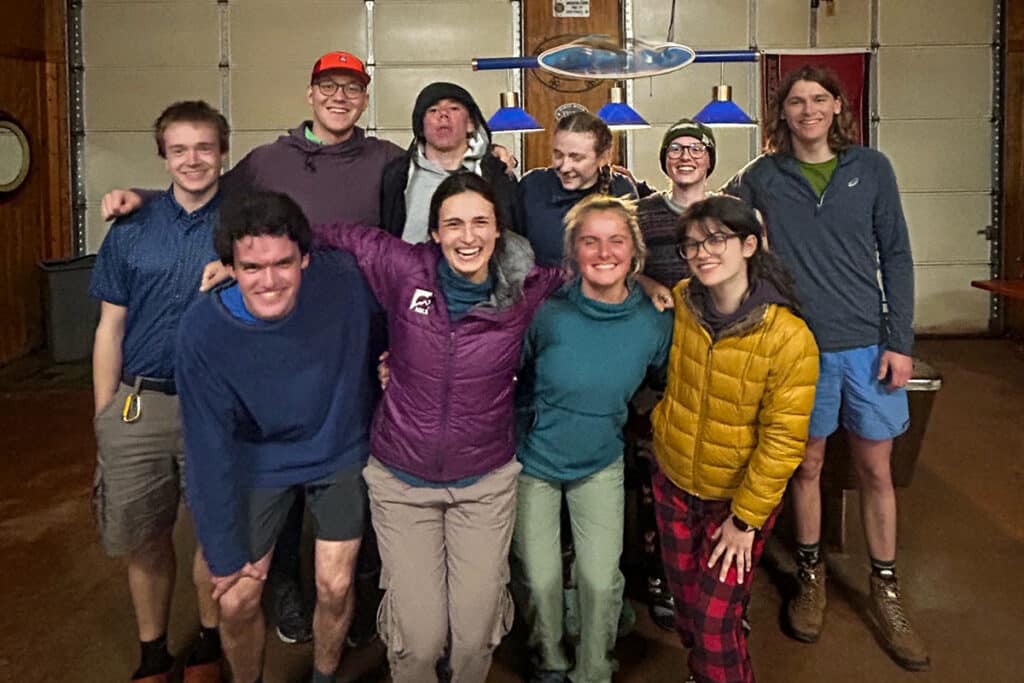
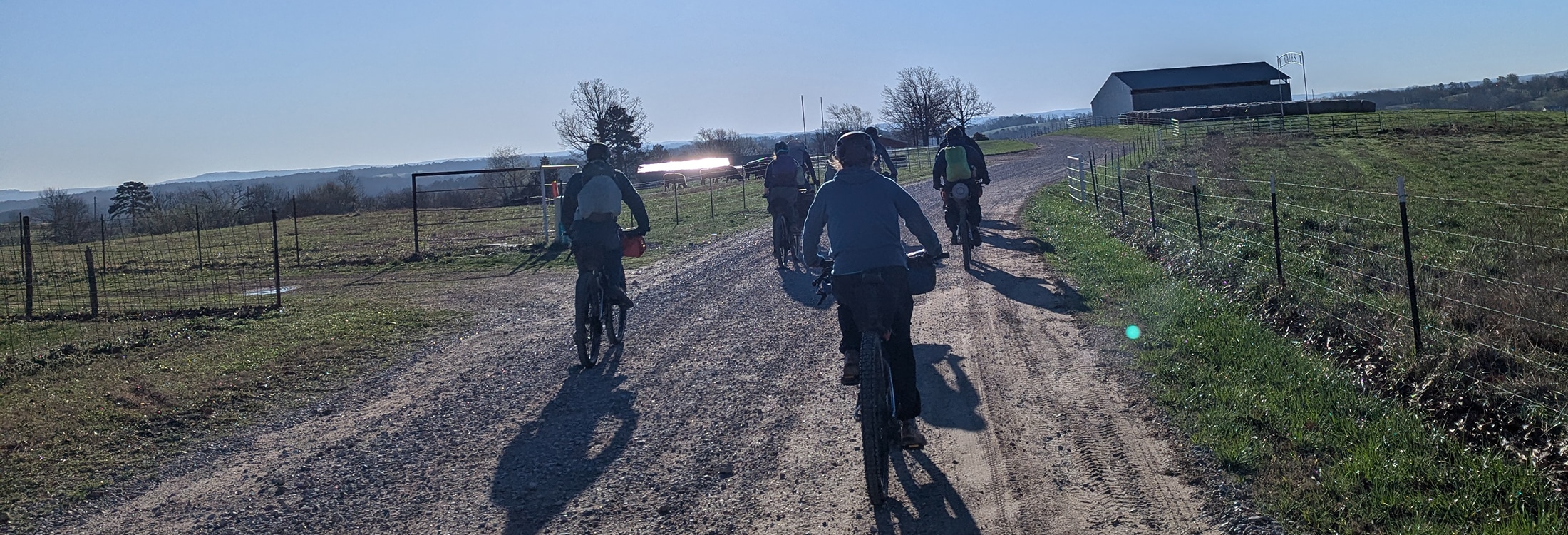
As a culmination of all they had learned since coming together in October 2025, this year’s class of Student Outdoor Leadership Experience (SOLE) participants set out to tackle a weeklong bikepacking trip on a route designed by themselves. Facilitated and supervised by RecSports staff, the SOLE students had spent weeks planning all aspects of the 7-day, 200-mile, self-supported bike ride that covered many different terrains.
This expedition put their learned technical and leadership skills to the test and serve as the final project of the group’s time together. From paved, impressive stretches on the Razorback Greenway that joins the Arkansas cities of Fayetteville and Bentonville, to remote gravel and dirt roads of the Ozark Mountains, the group of 10 Tennessee Volunteers experienced immense personal and professional growth during their days in the saddle, despite cutting the trip about 40 miles short of the original route.

“This expedition gave me the opportunity to push myself mentally, physically, and socially in a way that I have never done before,” says Abby Hegan, a senior studying biological science. “I was uncomfortable, I struggled, and I’ve grown as a result.”
Hegan continues that, “If I am totally honest with myself, I am very used to excelling at most things. As it turns out, bikepacking is not one of these things, and I couldn’t be more grateful.”

Bikepacking is a unique outdoor activity that combines bike riding and backpacking. Bikepacking trips create opportunities for students to form deep connections while exploring the outdoors and developing skills pursuing skill development. For bikepackers, trips include a regular mountain bike with specialty saddle bags that equip the rider with everything needed for backcountry camping. Students carried everything they needed to ride, camp, cook, eat, and sleep for the entirety of the trip.
For Hegan, the experience included “moments in which I did not know if I could make it another mile, moments where I felt like a freeloader, and moments in which I was just abjectly disappointed with myself. As the miles progressed, I was able to truly learn my limits; I pushed myself farther and harder than I ever have and ever knew I could. I let go of pride and learned to be honest with my peers about where I was at physically so that plans could change to best suit my situation, along with the group’s pacing and the issues others were dealing with as well.”
Although the trip was not a race but a group adventure, Hegan felt like she was in last place throughout the latter part of the week as she struggled to overcome illness, an old injury that flared up with the heightened physical activity, and her own disappointment in her physical abilities.
“I will always remember what it felt like to be last, what it felt like to push that hard, and what it felt like to be humble and communicate honestly with people I respected about how I was struggling,” says Hegan. “I hope I can be the leader that adapts to the situation like my peers did for me, and I hope I can be a leader that does not make the person in last place feel like they failed. I hope I can help others see the value in their effort alone, not purely their achievement, and be proud of that.”
Hegan’s experience demonstrates the vulnerability and honesty students encounter when coming face-to-face with not only their own physical limits but with the elements of the outdoors. The group relied on each other to work together, share openly, and adjust plans as needed for the betterment of everyone on the trip.
As Sydney Osgood, a senior studying nutrition, put it, “For me, it was a test on trusting my teammates to do their best work in their tasks and putting in my best work for something larger than myself—my team!”

Another student, a sophomore named Hannah Laramore who is studying nursing, noted that the biggest takeaway was the importance of adaptability, persistence, and self-reliance. These and other interpersonal skills, like communication and conflict management, are key learning objectives defined for the program overall.
Group participants were also able to put leadership skills they’ve been developing all year into practice. Students like Wayne Groth, a sophomore studying finance, observed that “you are constantly being watched as a leader, especially when your participants are in an unfamiliar and uncomfortable environment. The way you carry yourself, the way you respond to unplanned events, and the little things you do are super important.”
One of the goals of the SOLE program is to prepare students to become outdoor trip leaders themselves, and students who complete the experience are eligible to continue to work for RecSports as student trip staff on weekend excursions throughout the academic year.
“My largest takeaway from the experience was understanding how my subconscious actions as a leader impacted the group,” says Alex Craven, a senior studying mechanical engineering. “I had led trips before, but in a much less professional setting. The participants of a trip will expect an outdoor professional to lead them, and although I love goofing off outside, I need to meet those expectations as a lead.”
Altogether, this spring’s bikepacking trip culminated in immense personal and professional growth for the students involved. From adapting to unexpected challenges to making the judgment calls that shortened the trip, each student had the opportunity to expand their abilities and explore their own limits. And all while creating friendships and life lessons that will extend far beyond their time on Rocky Top.
We ate as a group and had group debriefs at the end of each day. This gave us time to reflect on our leadership decisions and gain insight from the rest of the group. This part of the trip was my favorite because it helped me to see how the others and I were rapidly growing and learning through the process of practicing leadership.
Sienna Dunham
Sophomore Studying Business Analytics